
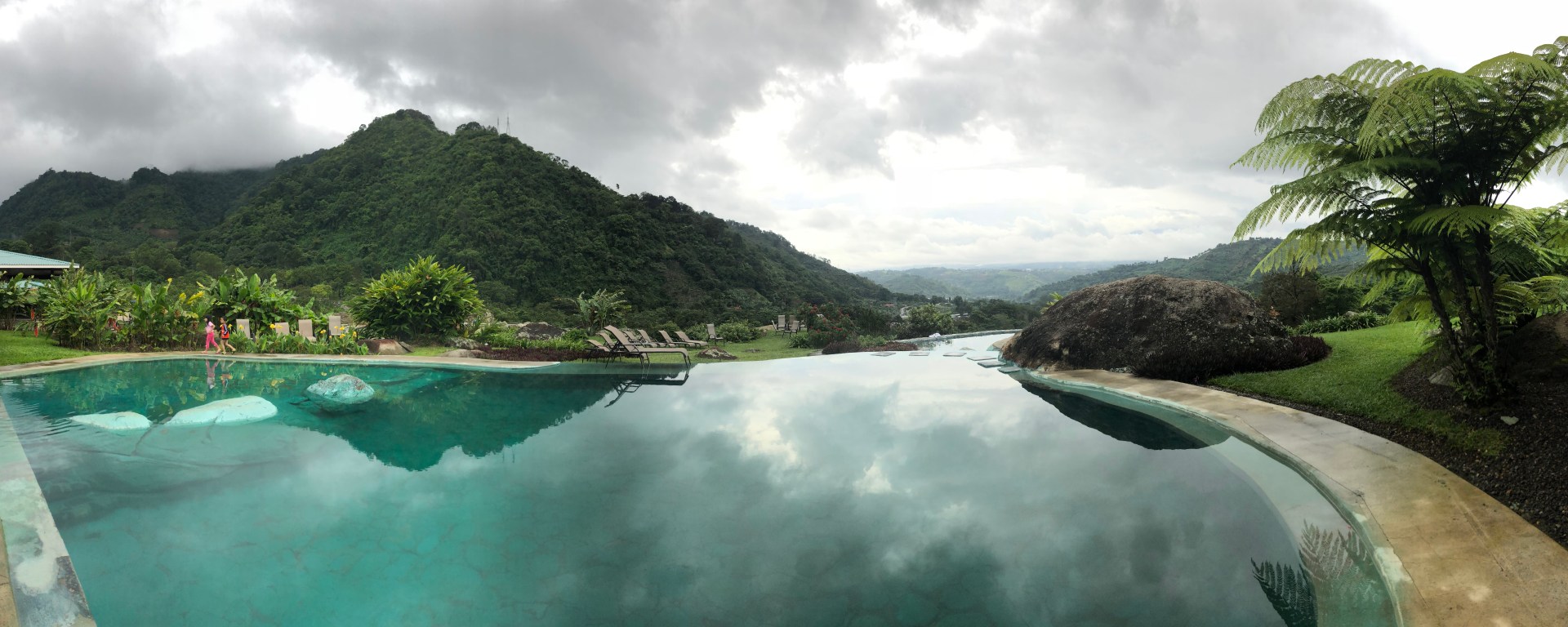
Over the summer, I studied abroad in Costa Rica through a program at KU. I lived with a host family in Curridabat, a city in the San José province. I went to school at the University of Costa Rica to improve my Spanish and to do research with professors at the University. As this was my first time abroad, I inevitably learned many invaluable lessons:
- It does not make you dumb or weak if you have to ask for help. In fact, if you are aimlessly wandering refusing to ask for help, THAT makes you more dumb. You will save so much more time/energy/money if you just ask the freaking question and admit you do not know everything (and that’s okay!).
- No one ever talks about the difficulties of traveling to a different country. On Instagram, you only see the happy scenic pictures (which, to be fair, there are way more of these moments than the struggling ones). But honestly, my first 24 hours in Costa Rica, I wasn’t quite sure what I had gotten myself in to because I was so overwhelmed with ignorance.
- You might think that’s a joke, but my friend Brynn and I literally called the front desk at our hotel (in Spanish) to ask if the chocolates were free, and instead of asking if they were free, we asked if they were books. Now try and imagine us trying to switch our dollars to colones (you get the picture). It all works out in the end, and most importantly, we learned!! It just took a hot minute to be successful.
- You’re smarter than you think. Your brain is doing work even when you do not realize it. Obviously I had to work at learning Spanish, but there were a few times at the end of my trip I just thought to myself, “holy cow, I actually understood that whole conversation in a language I did not grow up speaking.” It happened so slowly, I did not realize I was learning anything in-between the days. The native people I was close to in Costa Rica would always say “poco a poco,” meaning “little by little.” For me, this saying developed into a mindset of patience; sometimes we do not realize we are making progress, sometimes we have a lot of work to do, and sometimes discouragement creeps up; yet, little by little, we progress.
- It is so important to encourage people when they are trying to learn a new language. I cannot tell you how many times I have heard people saying offensive things about someone that does not speak English in the U.S., but these people are trying to learn our language!! Be nice!!!! I felt so lucky to be surrounded by people in Costa Rica who were encouraging and wonderful, despite my struggles to communicate with them. Learning to speak a language is humbling, and any extra support you can give someone can make a big difference.
- I experienced more culture shock in the classroom than in the country. Switching from a science major and a STEM future to a Spanish class was the most shocking and frustrating thing for me. I do not mean that in the pretentious “my science classes are way harder than your non-science classes” way, but rather in the “holy crap you can easily be deducted 8% because your teacher doesn’t like your introduction” way. It also taught me that I take my science for granted. It’s a cool subject, even if it does make you bust your booty.
- I totally take for granted my mastery of my native language. In English, I don’t think twice about multitasking when someone is talking to me. In Costa Rica, however, I had to give my full, undivided attention to whomever was speaking with me because otherwise I would not know what they were saying.
- When you don’t speak the same language as someone, you can no longer rely on charm or flattery to build rapport. For the first time in my life, I was challenged to show instead of tell as I was adjusting to a nonnative language. Instead of telling my host mom how much I appreciated dinner, and how thankful I was to be there, to be eating her food, to be sharing a meal with someone that has had so many cultures in her home, I did the dishes. It felt dumb and small, but it was one of the few ways I knew to express my gratitude.
I’m officially back in the States, and already dreaming about returning (quite literally… apparently I’m going to bike my way back down to Central America??). It was a difficult goodbye, but I have loved applying the things I learned abroad to my life in the United States. In Spanish, the verb to meet and to know are the same, and you use this verb when you are describing a place that you have been. I think this nuance to the language is interesting because a person can get acquainted with a country by exploring it, by speaking its language, or by eating its food, much like we do when we are getting to know a person. After this experience abroad, I think a country has the capability of making a mark on you in a similar way that a person might. It has been a pleasure getting to know Costa Rica, and I plan on reacquainting myself with it soon.


I love this article, but it also gave me a twinge of jealousy and longing. I, too, studied in Costa Rica (2013, make me feel old) and it made itself a cozy little spot in my heart. I love this place so much that I want to live there someday. I went back for two weeks in 2016 and am planning to go back this year and volunteer for a month. I completely relate to all the things you said, and I remember making similar mistakes with the word “free”. (I asked someone if something was “libre” rather than “gratis”. I made a LOT of silly/confusing mistakes in translations lol.) Costa Rica taught me so much about life and about myself and it made me want to live a life outside the bubble that I grew up in in Olathe, Kansas. It was my first time outside of the US and it changed my life forever. Thanks for sharing your story. Every time I read about someone’s experience in Costa Rica it makes me want to get back there that much faster. 🙂
LikeLike
Just rereading this. What’s this about biking co Central America..?!
LikeLike